I. Why 405nm?
1.405nm near-UV wavelength matches the maximum absorption peak of all mainstream UV photopolymer resins (including elastic resins for 3D printed shoes), enabling efficient photopolymerization/curing.
2.Higher photon energy than ordinary LED, deeper curing depth, wider adaptability to high-viscosity, high-filler industrial resins.
II. Why fiber-coupled laser for DLP?
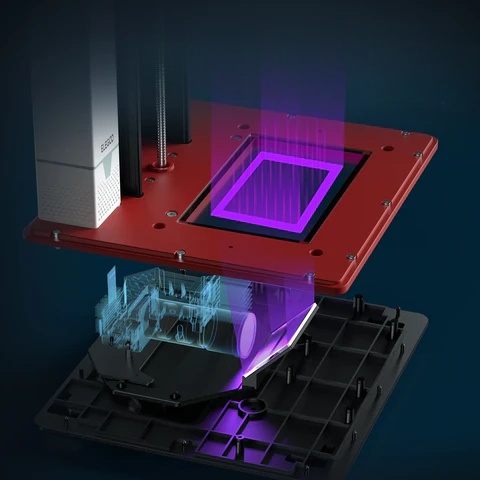
Ordinary LED has poor brightness, large light decay, uneven field illumination, and insufficient power for mass production.Fiber-coupled 405nm laser solves all these pain points for industrial DLP:
1. Fiber optic beam delivery: Flexible light path, easy optical system integration, stable light transmission, low energy loss; fiber connectors (FC/APC, FC/PC, 2.0mm narrow key you inquired before) are standard interfaces.
2.Ultra-high power density & uniform large-area illumination: High CW output power (W-class), homogenized beam after fiber output, even energy across the entire projection field — eliminates edge under-curing, supports large-format DLP printing.
3.Long lifetime & high stability: Low thermal drift, stable wavelength/power over 24/7 continuous industrial operation, no rapid attenuation like LED screens.
4.Precise power control: Adjustable output power, grayscale matching with DMD micro-mirrors, accurate curing dose control.
III. Complete optical workflow in industrial DLP printer
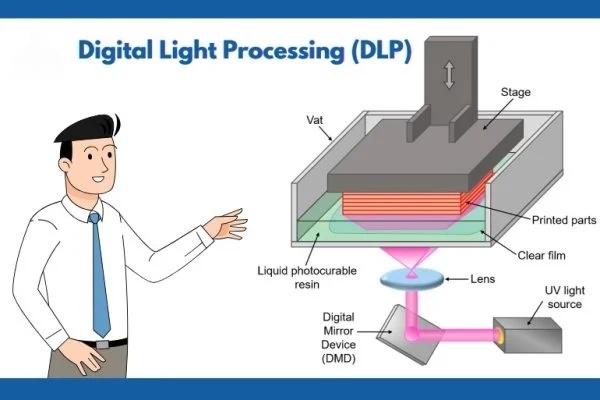
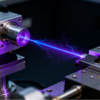
1. 405nm fiber-coupled laser module emits continuous UV laser (output via fiber, FC interface).
2. Laser beam enters the optical homogenizer & collimation system to turn divergent fiber light into parallel, uniformly bright large-area illumination.
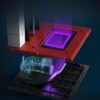
3. Uniform parallel light irradiates the DMD chip.
4. DMD micro-mirrors modulate the light per sliced pattern, reflecting the full-layer image upward/downward.
5. Projection lens focuses the patterned light onto the liquid resin surface inside the vat.
6. Irradiated resin undergoes photopolymerization, solidifies into one layer; platform lifts, repeat layer stacking.
IV. Unique benefits for industrial mass-production DLP (3D printed shoes included)
1. Faster printing speed: High laser energy drastically shortens single-layer exposure time.
2. Better resin compatibility: Supports high-modulus, elastic, tough industrial resins (the core material for integrated 3D print shoe midsoles).
3.Higher curing quality: Full-depth curing, less internal stress, stable mechanical performance of finished parts.
4. Larger build size: Uniform high-power light enables large-format DLP equipment for batch production.
V. Quick comparison summary
| Light source | Traditional DLP (LED) | Industrial DLP (405nm fiber laser) |
| Source type | UV LED | 405nm fiber-coupled diode laser |
| Power | Low, mW level | High, Watt level (5W/10W/30W) |
| Light uniformity | Poor edge attenuation | Excellent full-field uniform |
| Resin adaptability | Basic low-viscosity resin | All industrial/elastic shoe resins |
| Lifetime | Short, easy decay | Ultra-long stable operation |
| Application | Desktop small parts | Industrial mass production, 3D print shoes |
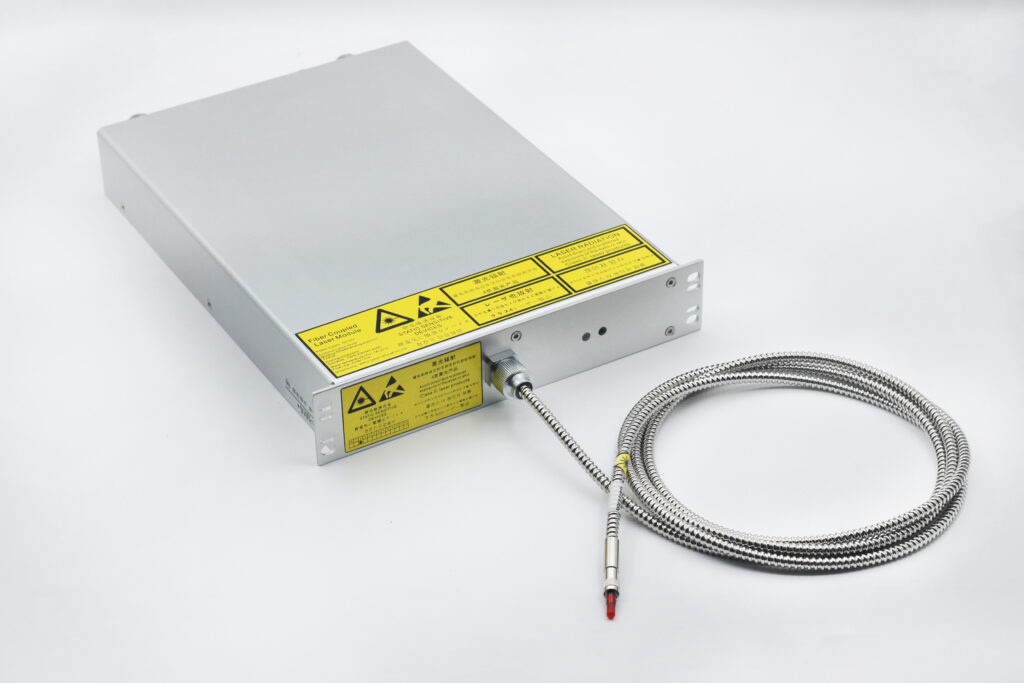
BU- Laser is the original manufacturer of fiber-coupled laser modules. The company has over 16 years of experience with lasers, and they can provide you with high-quality OEM & ODM services for all the semiconductor lasers!
Add comment