A medical device may require a compact light source that delivers consistent optical output through a flexible fiber. Choosing the wrong wavelength, power level, or coupling interface can create integration problems and increase development time. A blue laser diode module operating at 450nm can be a candidate for applications that require blue light, but you need to evaluate its optical specifications, fiber compatibility, and safety requirements before integrating it into medical equipment.
Dongguan Blueuniverse Laser Co., Ltd., also known as BU-LASER, manufactures semiconductor laser diodes, laser modules, and fiber-coupled laser solutions. Its 450nm 70mW blue fiber-coupled laser module provides a compact option for equipment developers who need a defined optical output and a customizable housing.
What Is a 450nm Blue Laser Diode Module?
A blue laser diode module converts electrical energy into laser light at a specified wavelength. In a fiber-coupled design, an optical interface delivers the emitted light into a compatible fiber, allowing the light source to sit separately from the treatment or measurement point.
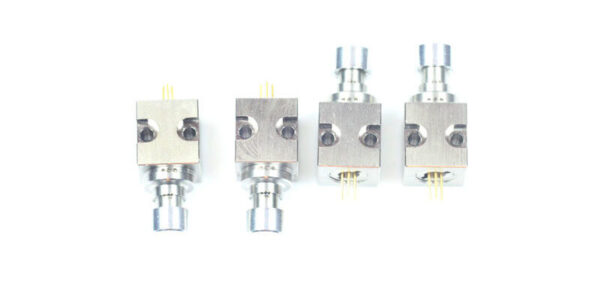
The BU-LASER model LY4580S10A-105 combines a 450nm wavelength with a rated optical output of 70mW. Its compact housing and ceramic ferrule interface may suit equipment designs where space and optical delivery need careful consideration.
Key specifications include:
- Wavelength: 450nm
- Output power: 70mW
- Working voltage: 5.1V
- Interface type: Ceramic ferrule
- Coupling efficiency: Greater than 85%, according to the supplied product specifications
- Housing dimensions: 20 × 10 × 10mm, customizable
- Lens: Optical glass
- Specified lifespan: More than 10,000 hours
These parameters provide a starting point for component selection. Before purchasing, confirm the operating conditions, output measurement method, fiber specifications, and test requirements with the supplier.
Where Can a 450nm Blue Fiber-Coupled Laser Be Used?
A 450nm blue fiber-coupled laser module can support different optical system designs, depending on the application’s wavelength requirements and the completed equipment’s performance.
Medical and Biomedical Equipment
Developers may evaluate blue laser sources for laboratory instruments, optical research systems, and selected medical equipment. Potential uses include fluorescence excitation, optical experiments, and research involving light interaction with biological samples.
However, the module’s wavelength and output power alone do not establish its suitability for a particular treatment. Ophthalmic procedures, surgery, photodynamic therapy, and other clinical applications require separate assessments of tissue exposure, delivery optics, thermal effects, and applicable medical-device regulations.
Compact Fiber-Optic Systems
The small housing can help engineers integrate the light source into compact assemblies. Fiber delivery may also allow the laser source to remain separate from the optical probe or instrument head.
Before finalizing the design, check whether the ceramic ferrule matches your fiber connector and whether the fiber’s core diameter, numerical aperture, and power-handling capacity meet your requirements.
Blue Laser Diode Module Comparison
Different laser configurations serve different integration needs. Compare the available options against your intended application rather than selecting a module based on wavelength alone.
| Selection factor | BU-LASER 450nm 70mW module | Other laser configurations |
|---|---|---|
| Wavelength | 450nm blue | Depends on the selected model |
| Optical output | 70mW | Varies by model |
| Light delivery | Fiber-coupled interface | Direct emission or fiber coupling |
| Housing | 20 × 10 × 10mm, customizable | Depends on the design |
| Interface | Ceramic ferrule | Depends on the model |
| Customization | OEM/ODM services available | Depends on the supplier |
A 70mW module may be appropriate when your design requires relatively low optical output. If your system needs a different wavelength, higher power, or a specific beam pattern, request a configuration that matches those requirements instead.
How to Select the Right Blue Laser Diode Module
Follow these steps before placing an order for a custom blue laser diode module.
- Define the application. Specify whether you are developing laboratory equipment, a medical instrument, an optical sensor, or another system.
- Confirm the optical requirements. Establish the required wavelength, output power, operating mode, and acceptable power variation.
- Check fiber compatibility. Confirm the connector, fiber core diameter, numerical aperture, and coupling requirements. Do not assume every ceramic ferrule fits every fiber assembly.
- Verify electrical and mechanical integration. Check the 5.1V working voltage, available installation space, heat dissipation, and mounting dimensions.
- Review safety and compliance needs. Request relevant test reports, laser classification information, and documentation for your intended market. Medical use may require additional validation of the complete device.
- Request an engineering evaluation. Provide your specifications to BU-LASER so the team can assess the standard model or discuss OEM/ODM customization.
Why Work With Dongguan Blueuniverse Laser Co., Ltd.?
Founded in 2010, Dongguan Blueuniverse Laser Co., Ltd. integrates laser research and development, production, and sales. The company offers semiconductor laser diodes, laser modules, and fiber-coupled lasers across a stated product range of 375nm to 980nm.
Its capabilities are relevant to buyers who need more than an off-the-shelf component:
- OEM/ODM support: Customization options for laser modules and housing dimensions.
- Product development experience: The company reports more than 15 years of laser R&D experience and over 80 patents, including 14 invention patents.
- Quality management: The company reports ISO 9001:2015 certification and additional certifications or assessments involving TUV, BV, and SGS.
- Multiple wavelength options: Product configurations cover blue, violet, green, red, and infrared wavelengths within its stated range.
For procurement teams, these capabilities provide a basis for discussing customization, production requirements, and quality documentation. Confirm the relevant certificates, test reports, and specifications for the exact model before approval.
FAQ
1. Is a 450nm 70mW blue laser module suitable for medical equipment?
It may be considered for selected optical research or medical-equipment designs. Suitability depends on the intended use, exposure conditions, system design, and applicable regulatory requirements; the module specification alone does not establish clinical suitability.
2. Can BU-LASER customize the module dimensions?
The listed housing measures 20 × 10 × 10mm and is customizable. Contact the manufacturer to confirm feasible dimensions, interface options, electrical requirements, and any effects on performance or lead time.
3. What information should you provide when requesting a quotation?
Provide the required wavelength, optical output, fiber and connector specifications, working voltage, installation dimensions, application, target quantity, and any certification or documentation requirements. These details help the supplier assess the configuration more accurately.
Conclusion
Selecting a blue laser diode module requires a balance between optical output, fiber compatibility, physical dimensions, and application-specific safety requirements. BU-LASER’s 450nm 70mW fiber-coupled model offers defined electrical and optical specifications, a ceramic ferrule interface, and customizable housing options for equipment developers. Confirm the technical details and intended-use requirements before incorporating it into your design.
Request a Technical Evaluation
Contact Dongguan Blueuniverse Laser Co., Ltd. to discuss the LY4580S10A-105 model. Share your target specifications, fiber assembly details, application, and expected order quantity to request a technical evaluation and OEM/ODM options.


Add comment