
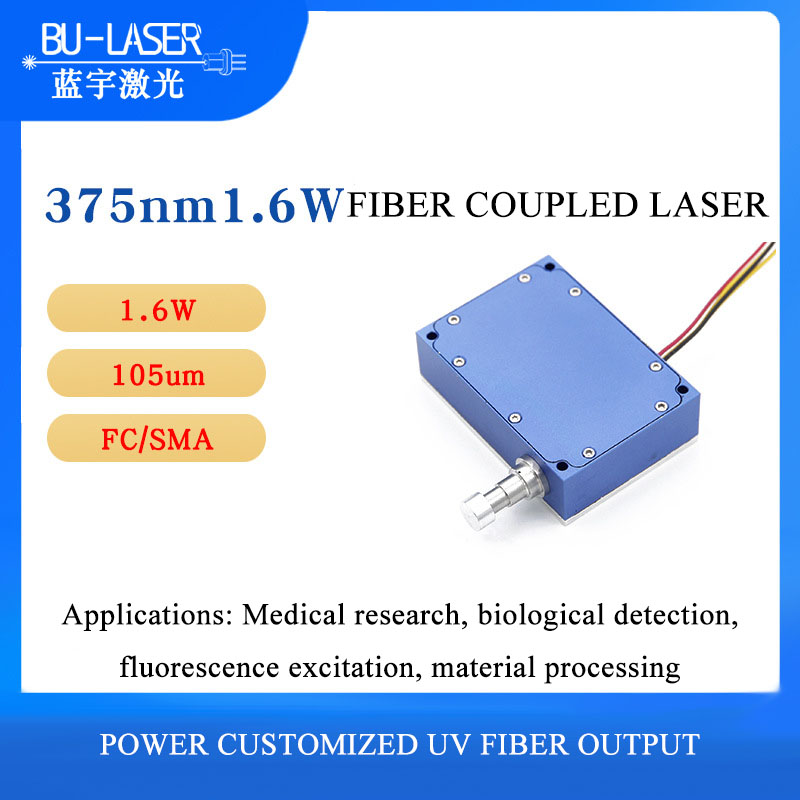
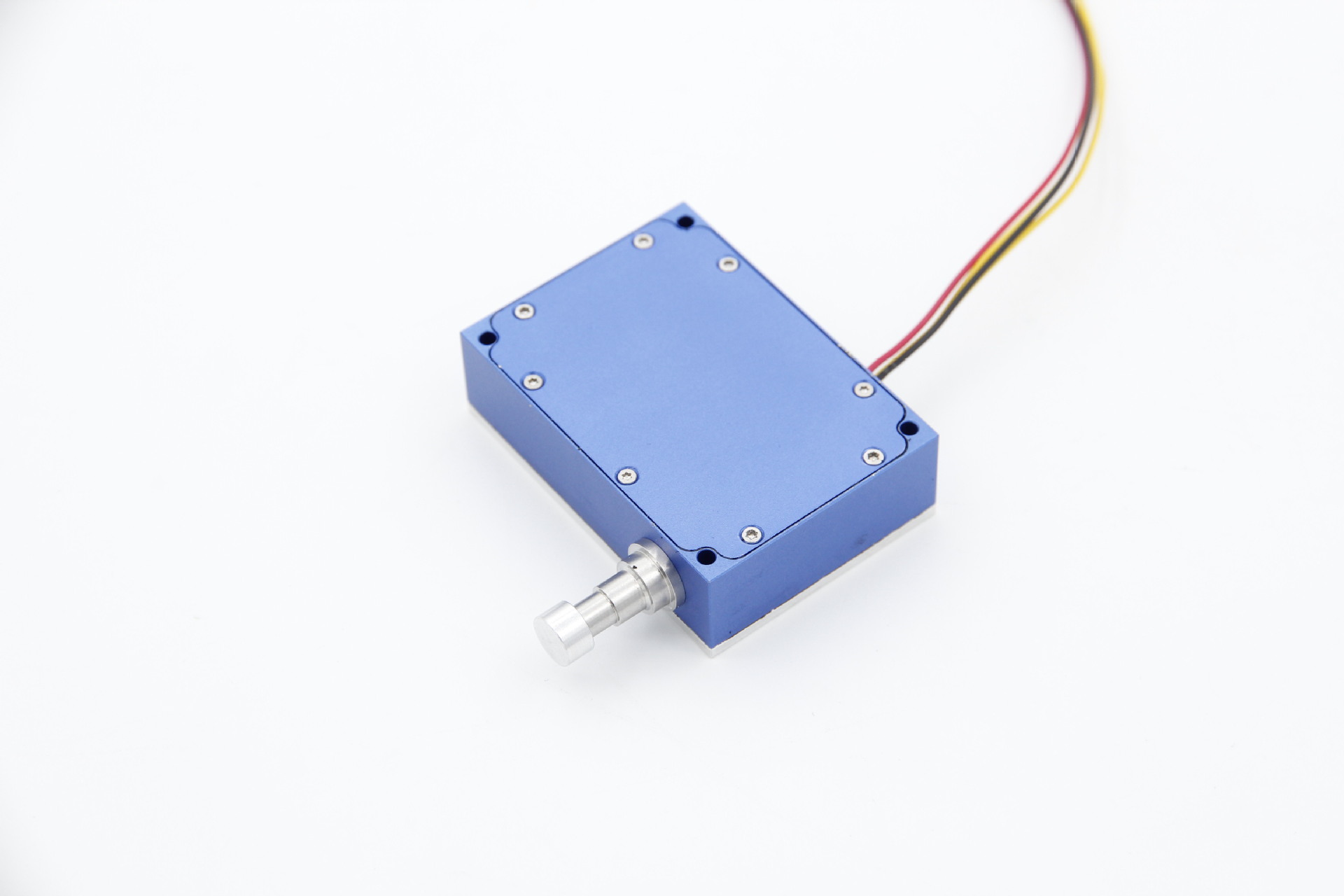

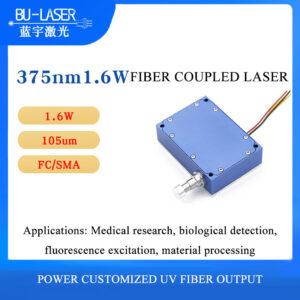
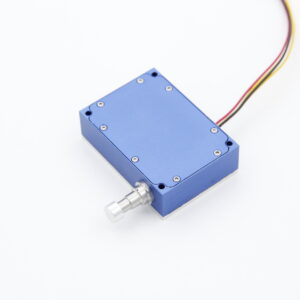
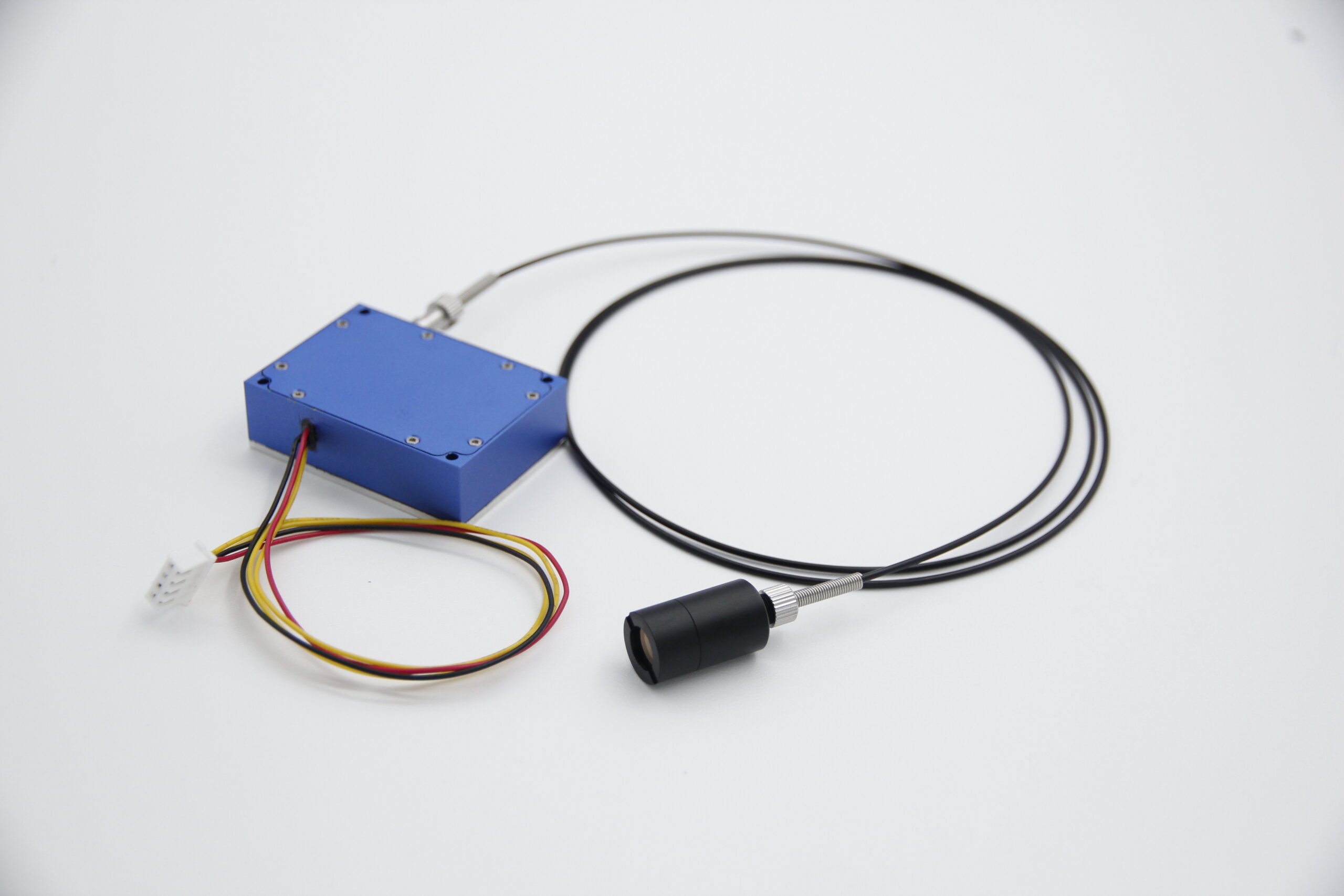
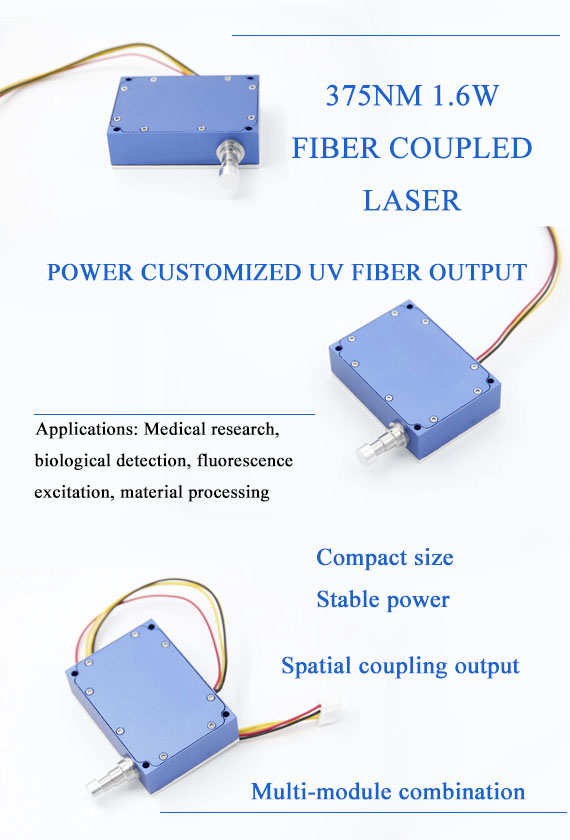
High Power 375nm 1.6W UV Fiber Coupled Laser Module for UV Curing
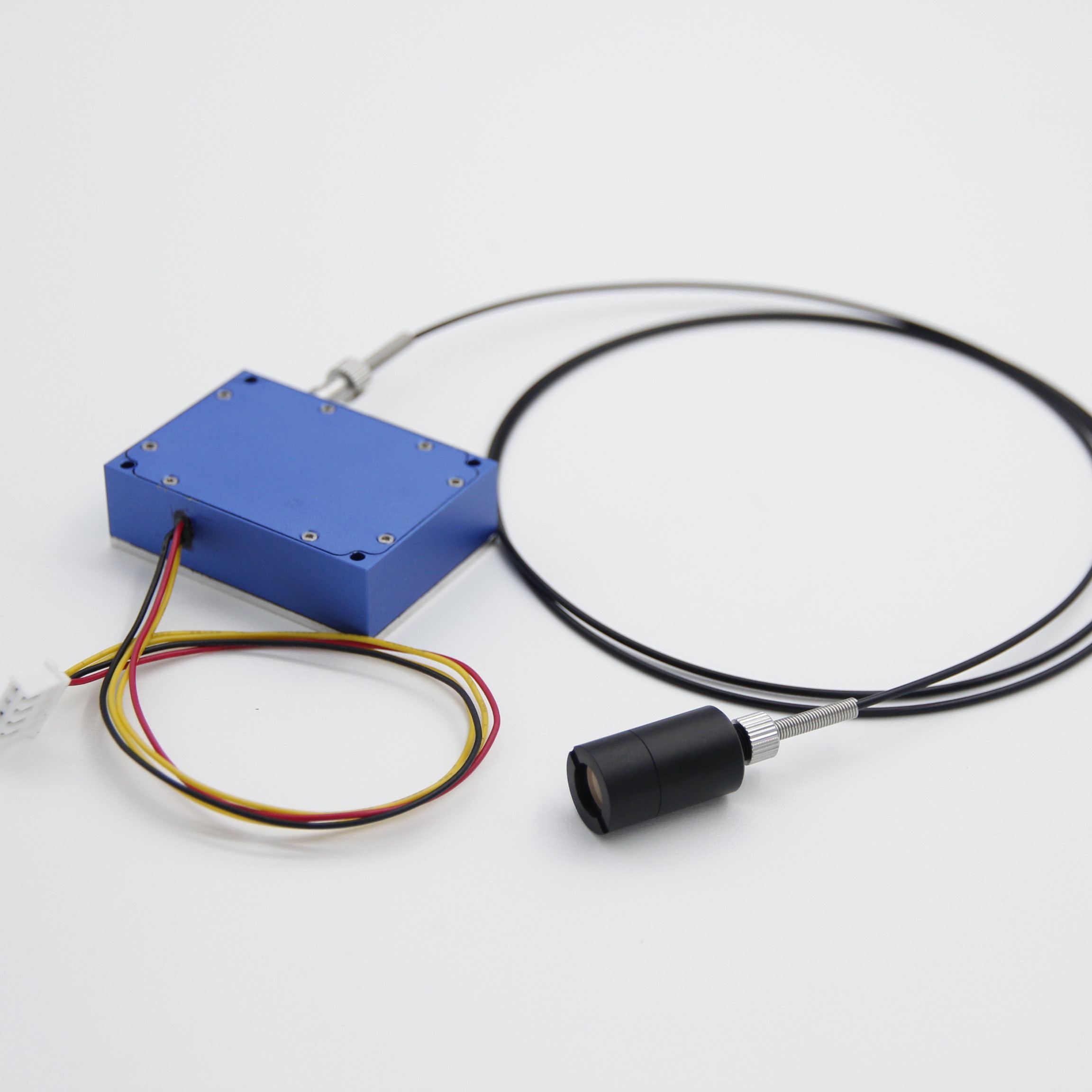
The High Power 375nm 1.6W UV Fiber-Coupled Laser Module—a versatile, industrial-grade light source engineered for high-precision applications across industrial processing, scientific research, and medical R&D. Leveraging 375nm UV-A wavelength’s optimal material interaction, 1.6W ultra-stable output, and low-loss fiber coupling, this module delivers controlled, efficient UV energy for diverse scenarios requiring high reliability and flexible integration.
Core Advantages
375nm UV-A Wavelength: Versatile Material Compatibility
375nm wavelength (±5nm tolerance) aligns with absorption peaks of UV-sensitive materials (photoresists, inks, adhesives, and biological chromophores) while minimizing material degradation; outperforms longer UV wavelengths (385nm/395nm) in curing efficiency and shorter UV-C (≤280nm) in penetration depth—ideal for both industrial processing and sensitive research applications.
Low-Loss Fiber Coupling: Flexible Integration
Equipped with UV-grade multimode silica fiber (core diameter 200μm/400μm optional, NA=0.22, coupling efficiency ≥85%); flexible fiber (1.5m standard, custom lengths up to 5m) enables precise energy delivery to confined spaces or complex setups (e.g., production lines, lab equipment, microscopes). Fiber connector options (SMA-905/FC/PC) ensure compatibility with mainstream systems.
Key Applications
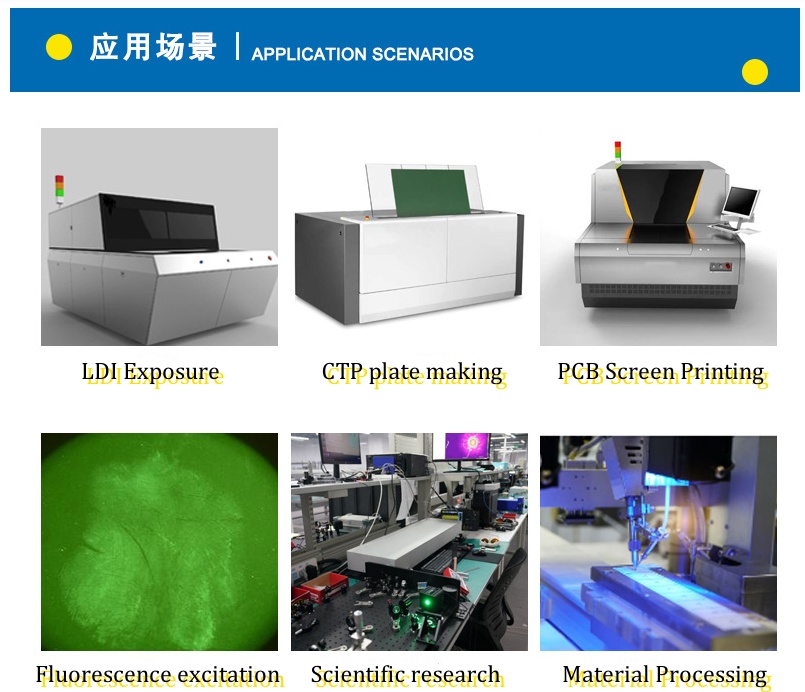
1. Industrial Processing
- UV Curing: High-speed curing of PCB solder masks, UV inks, adhesives, and optical fiber coatings.
- Microfabrication: Precision structuring of polymers, glass, and thin films for MEMS and microfluidics.
- CTP Printing: High-resolution plate making with sharp edge definition and consistent dot reproduction.
2. Scientific & Medical Research
- Biomedical Research: Photodynamic therapy (PDT) studies, fluorescence excitation (e.g., DAPI/Hoechst dyes), and photobiomodulation.
- Material Science: UV-induced material modification, polymer aging research, and nanomaterial synthesis.
- Microbiology: Pathogen inactivation studies and microbial photoinactivation research.
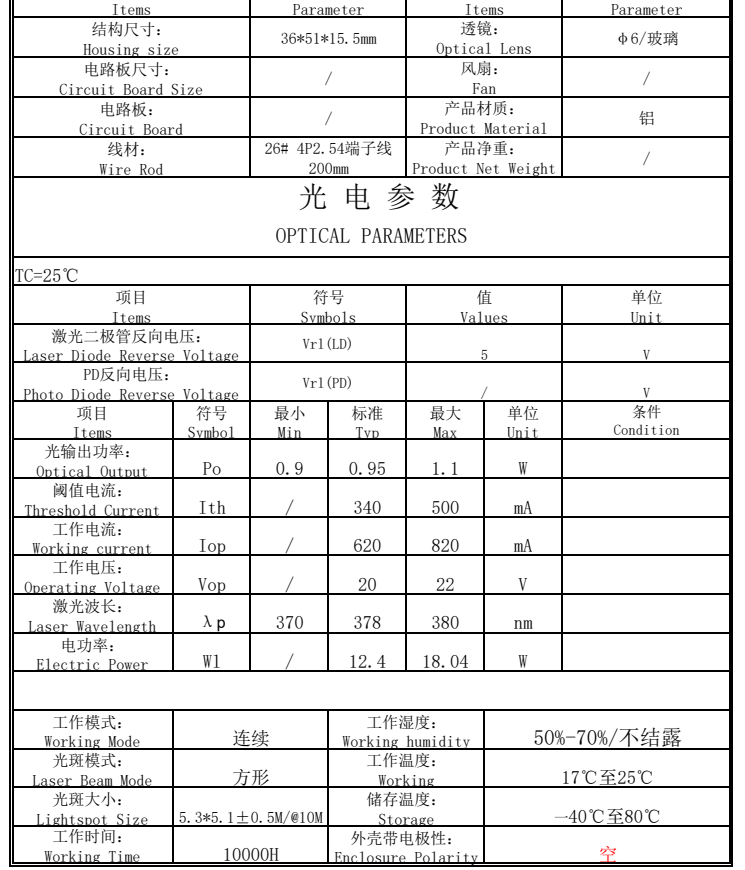
Core Specification :
| Wavelength | 375nm |
| Output Power | 1.6W(CW) |
| Working Voltage | 20-22V |
| Fiber Core Diameter | 200um |
| Coupling Efficiency | 85% |
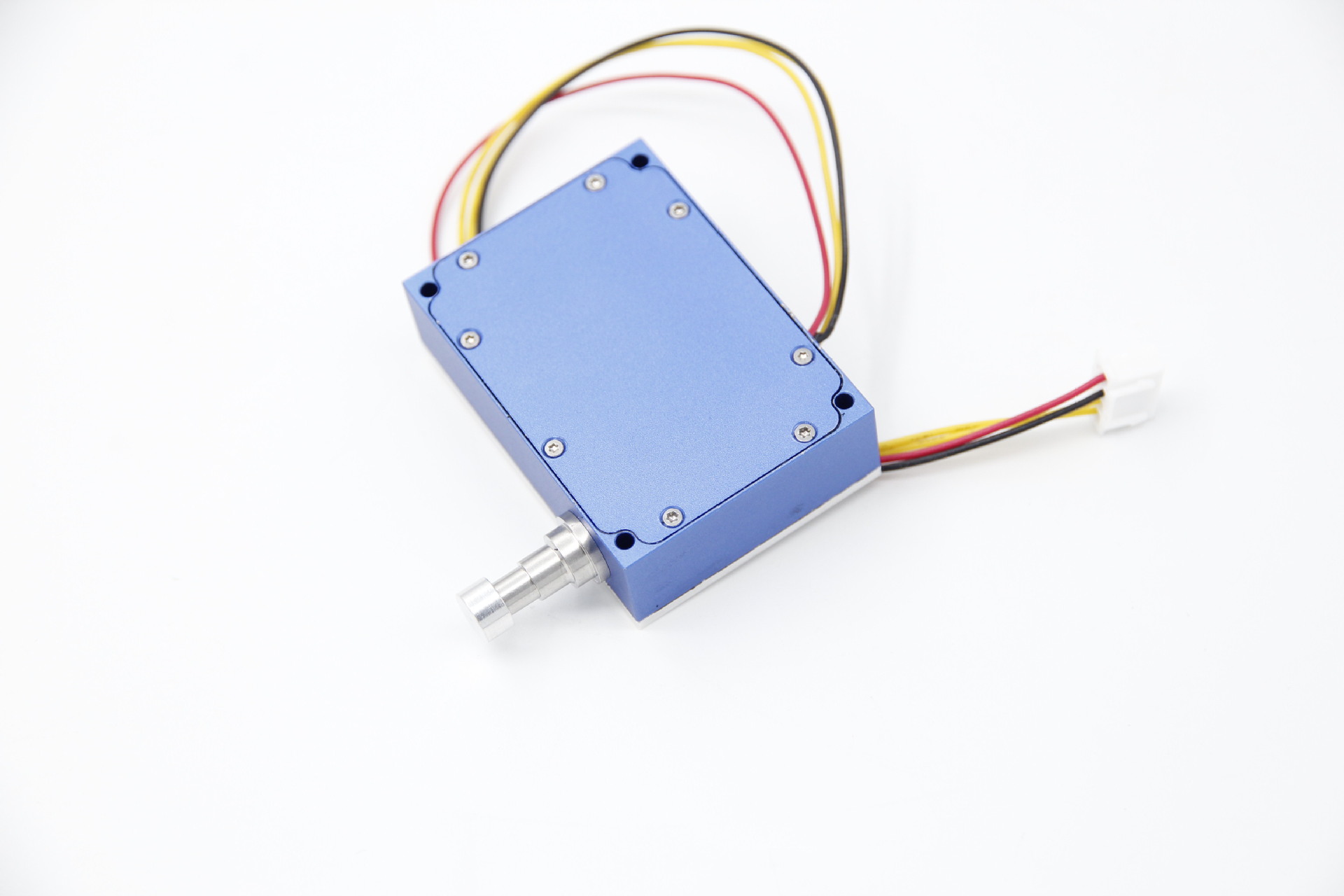
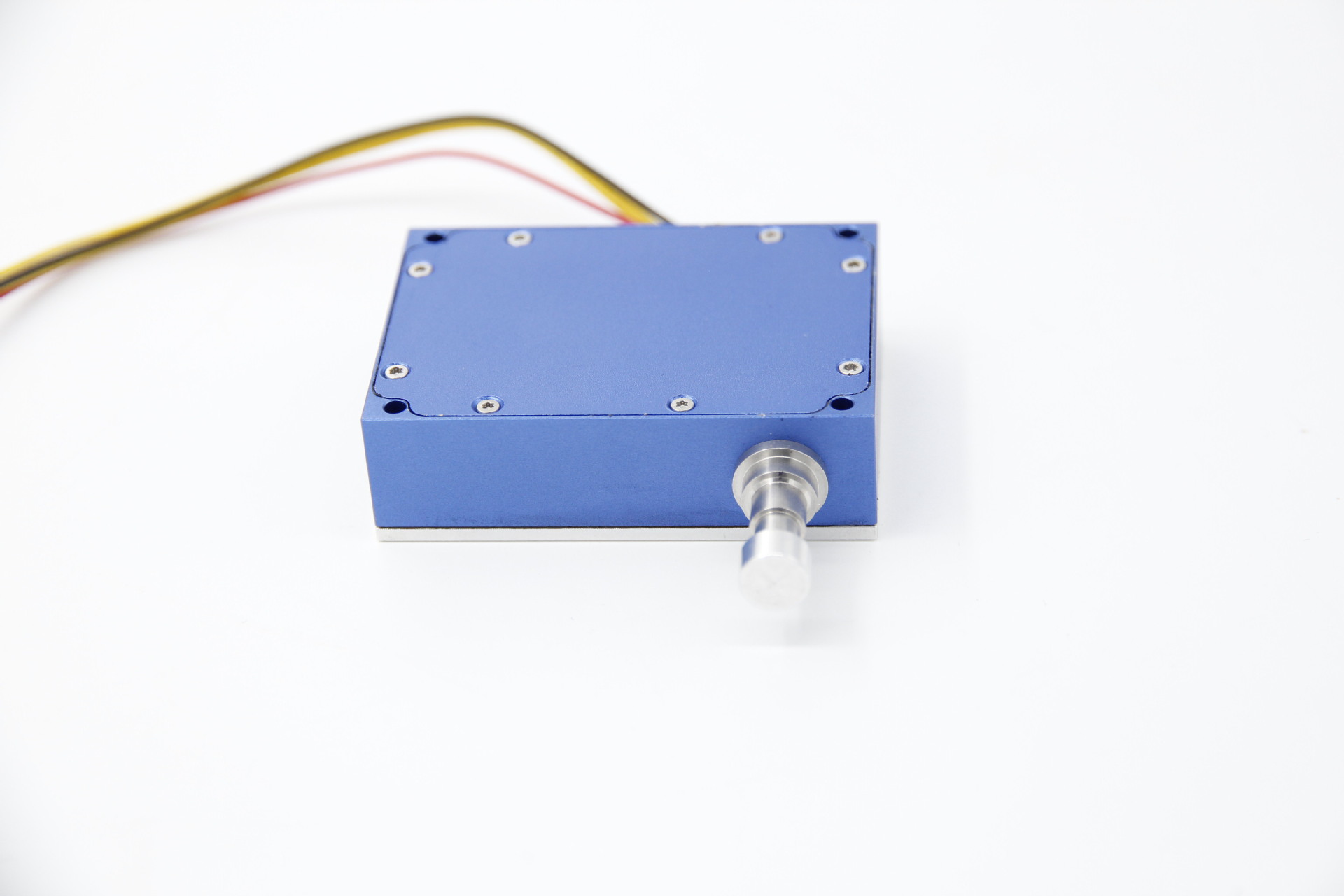
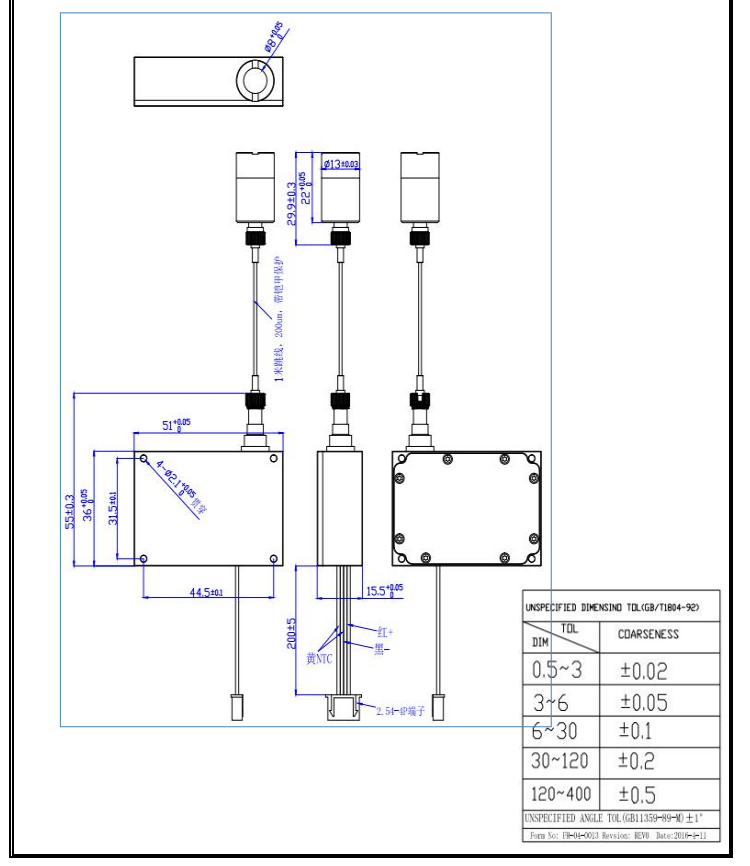
| Housing Size | 36*51*15.5mm (Customizable) |
| Lifespan | 10,000 hours |
Product Display :



Reviews
There are no reviews yet.