

High Power Collimated Laser 405nm 600mW Fiber Coupled Laser Module for Biological Detection
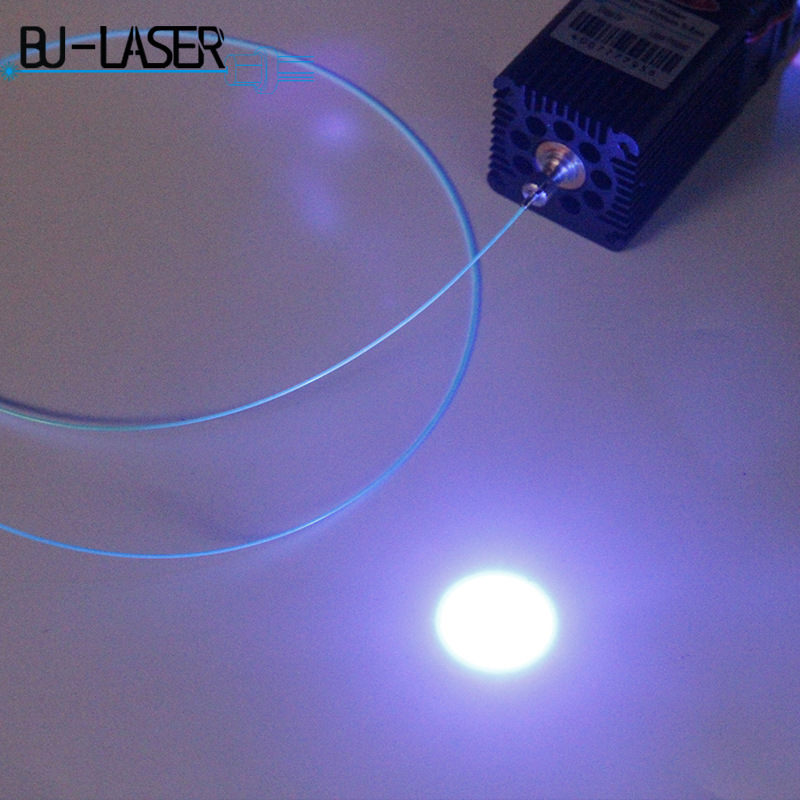
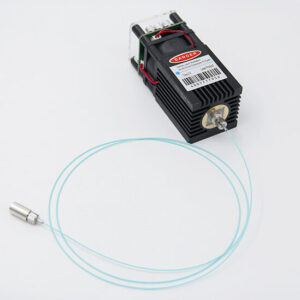
The High Power Collimated Laser 405nm 600mW Fiber Coupled Laser Module, a professional-grade core component tailored for biological detection systems. Integrating collimated beam technology, 405nm lasers’ bio-material absorption optimization, 600mW high-power output, and precision fiber coupling, it’s ideal for fluorescence excitation, cell analysis, microbial detection, and molecular diagnostics, enabling accurate, high-efficiency biological sample testing.
Core Advantages
Collimated Beam Design for High-Precision Detection:
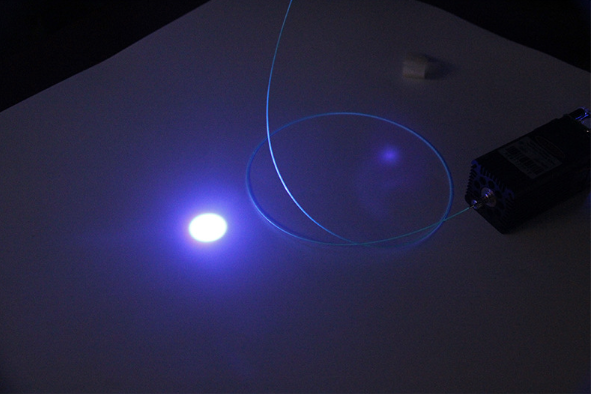
Emits a highly collimated laser beam with minimal light scattering, ensuring stable energy transmission over long working distances (up to 2m); eliminates signal interference to guarantee accurate data acquisition for biological detection scenarios like fluorescence microscopy and flow cytometry.
405nm Laser Optimization for Bio-Applications:
405nm wavelength matches the absorption peaks of common fluorescent dyes (e.g., DAPI, Hoechst) and biological molecules; efficiently excites fluorescent signals without damaging biological samples, making it perfect for cell imaging and microbial identification tasks.
600mW High Power for Efficient Detection:
Delivers CW mode output with lower power fluctuation, providing strong, consistent excitation energy to shorten sample detection time by 40%; supports high-throughput biological testing, meeting the efficiency demands of clinical laboratories and research institutions.
Fiber Coupled Transmission for Flexible Integration:
Equipped with medical-grade silica fiber (core diameter 105μm, NA=0.22, coupling efficiency ≥85%), enabling flexible energy delivery to confined detection areas (e.g., microfluidic chips) and seamless integration with mainstream biological detection equipment (spectrophotometers, bioanalyzers); plug-and-play design reduces system setup time.
Key Applications:
Perfect for biological detection scenarios, including fluorescence excitation, cell viability analysis, microbial detection, molecular diagnostics, and lab-on-a-chip systems; also applicable to academic research in biochemistry, genetics, and immunology fields.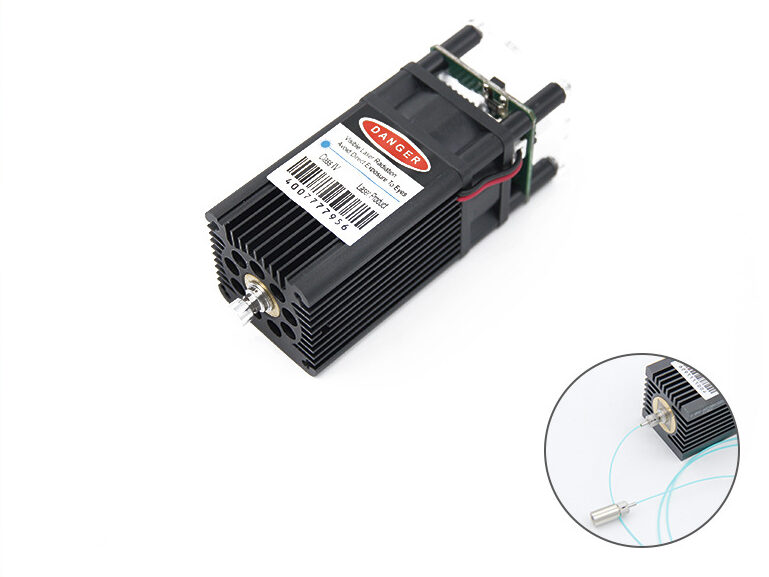
Core Specification :
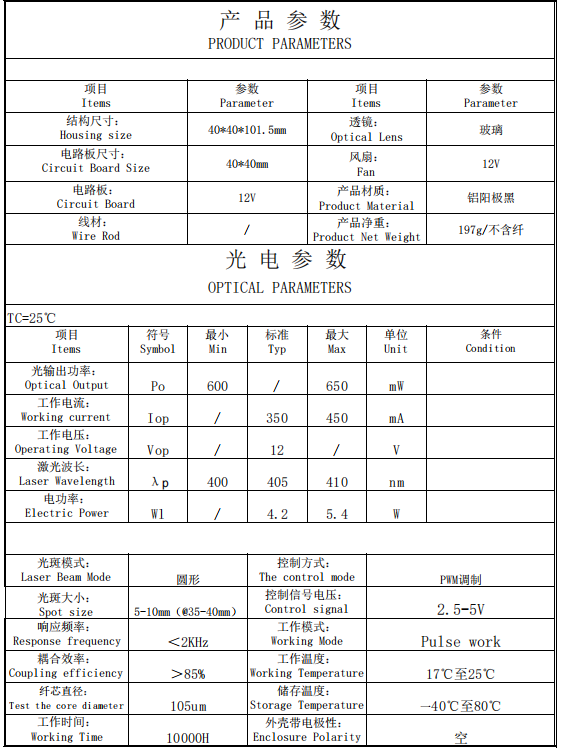
| Wavelength | 405nm |
| Output Power | 600mW |
| Working Voltage | 12V |
| Beam Mode | Round Beam |
| Beam Size | 5-10mm @35-40mm |
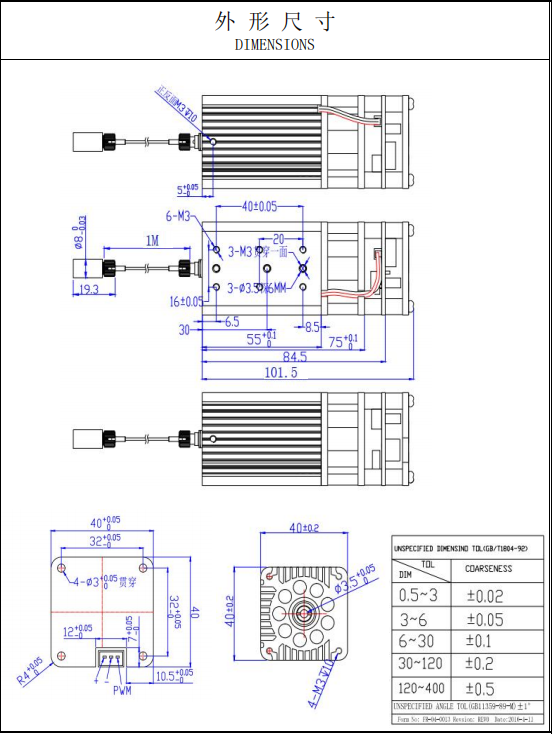
| Housing Size | 40*40*101.5mm (Customizable) |
| Lens | Glass lens |
| Lifespan | 10,000 hours |
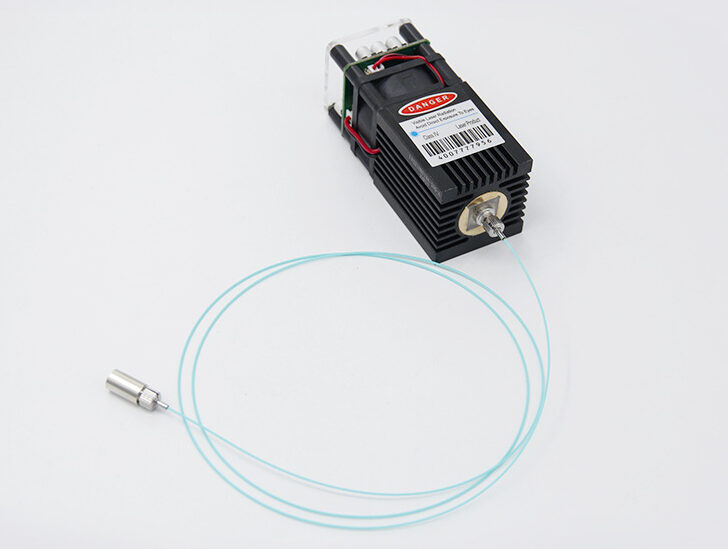
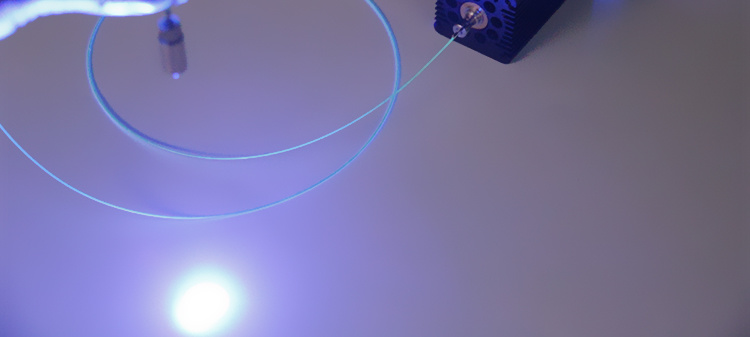
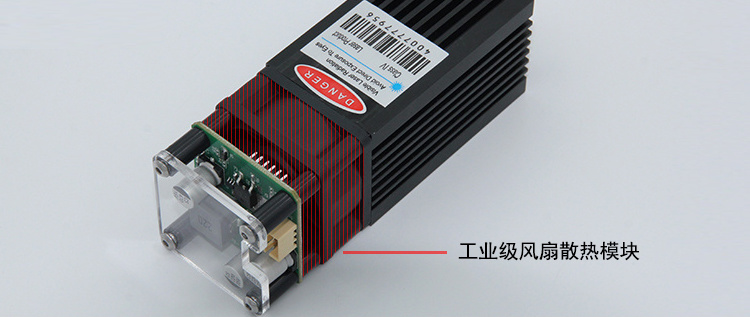
Product Display :


Reviews
There are no reviews yet.